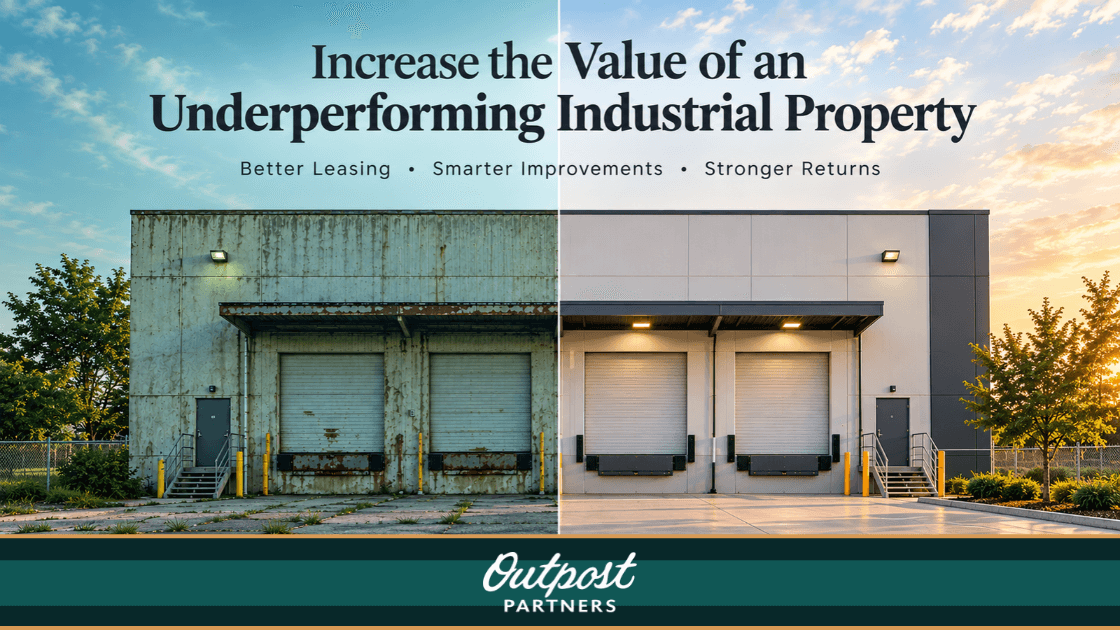
Not every industrial property lives up to its potential. Some struggle with vacancies, others have outdated features, and some simply aren't generating the income their owners expected.
The good news is that an underperforming property isn't necessarily a bad investment. In many cases, the right changes can improve its performance without requiring a complete renovation.
For industrial property owners, the challenge is figuring out what needs to change. Is the property priced too high? Does it need repairs? Is it attracting the wrong tenants? Or could the space serve a different purpose altogether?
Answering these questions can help owners make better decisions about where to invest their money and how to get more out of their property.
Here's what to look at when evaluating an underperforming industrial asset.
Start by Understanding What's Holding the Property Back
Before spending money on improvements, take a closer look at why the property isn't performing as expected.
A warehouse with high vacancy might have a pricing problem, but it could also have limited loading access or features that don't meet the needs of local businesses. A fully occupied building might still be underperforming because of rising maintenance costs or rental rates that haven't kept pace with the market.
Some common issues include:
- High vacancy: Empty space means lost rental income while expenses continue to add up.
- Below-market rents: Existing leases may generate less income than comparable properties, depending on their terms and the property's condition.
- Deferred maintenance: Roof problems, deteriorating pavement, and aging building systems can discourage prospective tenants.
- High operating costs: Recurring repairs, utilities, and maintenance expenses can eat into the property's income.
- Limited tenant appeal: The building may not offer the layout, access, power capacity, or other features that today's tenants need.
The first step is to understand which of these problems are affecting the property. Without that information, it's easy to spend money on improvements that don't address the real issue.
1. Take Another Look at Your Leasing Strategy
One of the most direct ways to improve an industrial property's performance is to generate more consistent rental income.
That doesn't always mean increasing the rent. Sometimes, adjusting the asking rate, improving the marketing, or offering more suitable lease terms can make a bigger difference.
Make Sure Your Rental Rates Are Competitive
Compare your property's rental rates with similar industrial buildings in the same area. Look beyond the advertised price and consider differences in building condition, loading facilities, location, lease structure, and tenant incentives.
If competing properties offer better functionality at a similar price, prospective tenants may have little reason to choose yours.
On the other hand, a well-maintained building with convenient access and features that tenants value may be able to command stronger rents.
The key is understanding what the market is willing to pay for your specific property.
Find Ways to Reduce Vacancy
Every month a property sits vacant is another month without rental income.
Review how the property is being marketed, whether the listing reaches the right audience, and whether the asking terms make sense for the space.
Clear property photos, accurate building specifications, and a straightforward explanation of the property's advantages can help prospective tenants make decisions more easily.
Working with an industrial real estate broker can also help owners reach businesses looking for space and better understand competing properties.
Keep Good Tenants in Place
Finding a new tenant takes time and money. Depending on the property, owners may need to cover leasing commissions, tenant improvements, concessions, and months of lost rent.
That's why it's worth paying attention to existing tenants before their leases expire.
Addressing reasonable maintenance concerns, communicating early about renewals, and offering competitive terms can help reduce turnover and keep income more predictable.
A stable tenant relationship can be just as valuable as securing a new lease at a higher rate.
2. Focus on Improvements That Actually Matter
Not every industrial property needs a major renovation. In many cases, a few well-chosen improvements can make the building more attractive to prospective tenants.
Start by looking at the features that affect how the property functions day to day.
Depending on the building, that might mean repairing the roof, improving exterior lighting, resurfacing damaged pavement, fixing loading dock doors, or addressing drainage problems.
Other properties may benefit from improvements to electrical capacity, warehouse lighting, or building systems.
The right priorities will depend on the property's condition and the type of tenant you're trying to attract.
Don't Spend Money Just to Make the Property Look Better
It's tempting to invest in upgrades that make a building look newer, but appearance alone doesn't guarantee a better return.
For example, an expensive office renovation may not help much if most prospective tenants care more about warehouse space, truck access, and loading capacity.
Likewise, specialized improvements may have limited value if the next tenant doesn't need them.
Before committing to a project, ask three questions:
- Will this improvement help attract or retain tenants?
- Could it reduce ongoing expenses or prevent more costly repairs?
- Is the expected benefit worth the upfront cost?
If the answers aren't clear, it may be worth revisiting the plan before moving forward.
3. Consider Whether the Property Needs a Different Tenant
Sometimes, the problem isn't the building itself. It's the type of tenant the owner is trying to attract.
A large industrial space may be difficult to lease to a single business but could appeal to several smaller companies if the layout and building requirements allow it.
A warehouse that isn't ideal for a large distribution operation might still work well for contractors, service businesses, local distributors, or light manufacturers.
This is where repositioning can become an option.
Explore Alternative Uses
Depending on local demand and property restrictions, owners may want to consider:
- Small-bay industrial space for smaller businesses.
- Flex space that combines office and warehouse areas.
- Contractor yards or equipment storage.
- Industrial outdoor storage for eligible sites.
- Specialized industrial or service uses.
Each option comes with its own requirements. Dividing a warehouse into smaller suites, for example, may require additional walls, separate utilities, fire protection upgrades, and more hands-on property management.
Industrial outdoor storage may be attractive for certain operators, but zoning, drainage, surface conditions, access, and other site requirements must be checked first.
Before making a change, look at the businesses operating in the surrounding area and determine whether there's enough demand to support the proposed use.
A different strategy can create new opportunities, but only if it makes sense for the property and the market.
4. Keep Operating Expenses Under Control
Rental income is only part of the picture. What matters to an investor is how much income remains after operating expenses.
A property can have strong occupancy and still disappoint financially if maintenance, utilities, insurance, and other costs are too high.
Start by reviewing recurring expenses and looking for areas where costs can be managed without compromising the property's condition or tenant experience.
For example, owners might compare service contracts, address recurring repair problems, improve lighting efficiency, or introduce a more consistent preventative maintenance schedule.
Fixing a recurring issue early can sometimes be less expensive than repeatedly paying for emergency repairs.
Understand Which Expenses You Can Recover
Lease structure also matters.
Under a triple-net (NNN) lease, tenants generally pay their share of property taxes, insurance, and maintenance costs as specified in the agreement. Other lease structures may leave the landlord responsible for a larger portion of these expenses.
Review existing leases carefully to understand which costs can be recovered from tenants and which remain the owner's responsibility.
Any changes to expense allocation must follow the existing agreement and applicable law.
The goal is to manage costs intelligently while maintaining a property that tenants want to occupy.
5. Make the Property Easier to Market and Sell
Even when a property has potential, incomplete information can make it harder to attract tenants or secure buyer interest.
Owners should make sure they can clearly explain what the property offers and provide the information prospective tenants and buyers need.
That includes accurate floor plans, building specifications, site plans, loading details, available power capacity, and clear photographs.
For investment properties, financial documentation is equally important. Buyers may want to review rental income, operating expenses, occupancy, lease terms, maintenance history, and upcoming capital requirements.
Keeping these records organized can make the evaluation process easier and reduce uncertainty during negotiations.
A well-presented property won't automatically command a higher price, but clear documentation and accurate marketing can help buyers and tenants understand its value.
6. Run the Numbers Before Investing in Improvements
Before committing to a value-add project, estimate how much it will cost and what it could realistically accomplish.
Let's say an industrial property generates $180,000 in annual net operating income (NOI). After improving leasing performance and addressing operating inefficiencies, the owner believes NOI could reach $210,000.
That would represent an additional $30,000 in annual NOI.
For illustration, if the property were valued at a 7.5% capitalization rate, the additional income could imply approximately $400,000 in additional property value.
The calculation is straightforward:
Increase in indicated property value = Increase in annual NOI ÷ Capitalization rate
In this example:
$30,000 ÷ 0.075 = $400,000
However, that figure isn't the same as profit from the improvements.
The owner still needs to account for renovation costs, leasing commissions, tenant incentives, vacancy during the work, financing expenses, and other costs associated with improving the property.
The calculation also assumes that the capitalization rate remains unchanged. In reality, market conditions, property risks, and buyer demand can affect the value investors are willing to pay.
The important takeaway is to evaluate the entire investment, not just the potential increase in rental income.
7. Decide Whether to Hold, Refinance, or Sell
Once you've identified the property's problems and evaluated possible improvements, the next question is what to do with the asset.
There isn't one right answer for every owner.
Hold and improve. If the property has fixable issues and a realistic path to stronger performance, investing in improvements may make sense for an owner with the time and capital to execute the plan.
Refinance. If the property's income and overall financial position improve, refinancing may become an option. The outcome will depend on lender requirements, interest rates, debt-service coverage, and the owner's circumstances.
Improve and sell. Some owners may prefer to address vacancy, complete essential repairs, and organize their financial records before bringing the property to market.
Sell as-is. If the cost, risk, or time required to improve the property outweighs the likely benefit, selling in its current condition may be the more practical choice.
The decision should come down to the property's potential, the resources required, current market conditions, and your investment objectives.
Turning an Underperforming Property Into an Opportunity
An underperforming industrial property doesn't necessarily need a complete overhaul. Sometimes, the biggest opportunities come from addressing a few specific issues that have been holding it back.
That could mean improving leasing performance, making targeted repairs, reducing avoidable expenses, or finding a tenant base that better fits the property.
For industrial property owners in San Antonio and across Texas, the best approach starts with understanding the local market and evaluating the options before committing to a major investment.
At Outpost Partners, we work with industrial property owners, investors, and developers to help them evaluate opportunities and make informed decisions about their assets.
If your industrial property isn't performing the way you expected, let's discuss what's holding it back and what options may be worth exploring.
Contact Outpost Partners to discuss your industrial property and explore your options for leasing, repositioning, or selling.