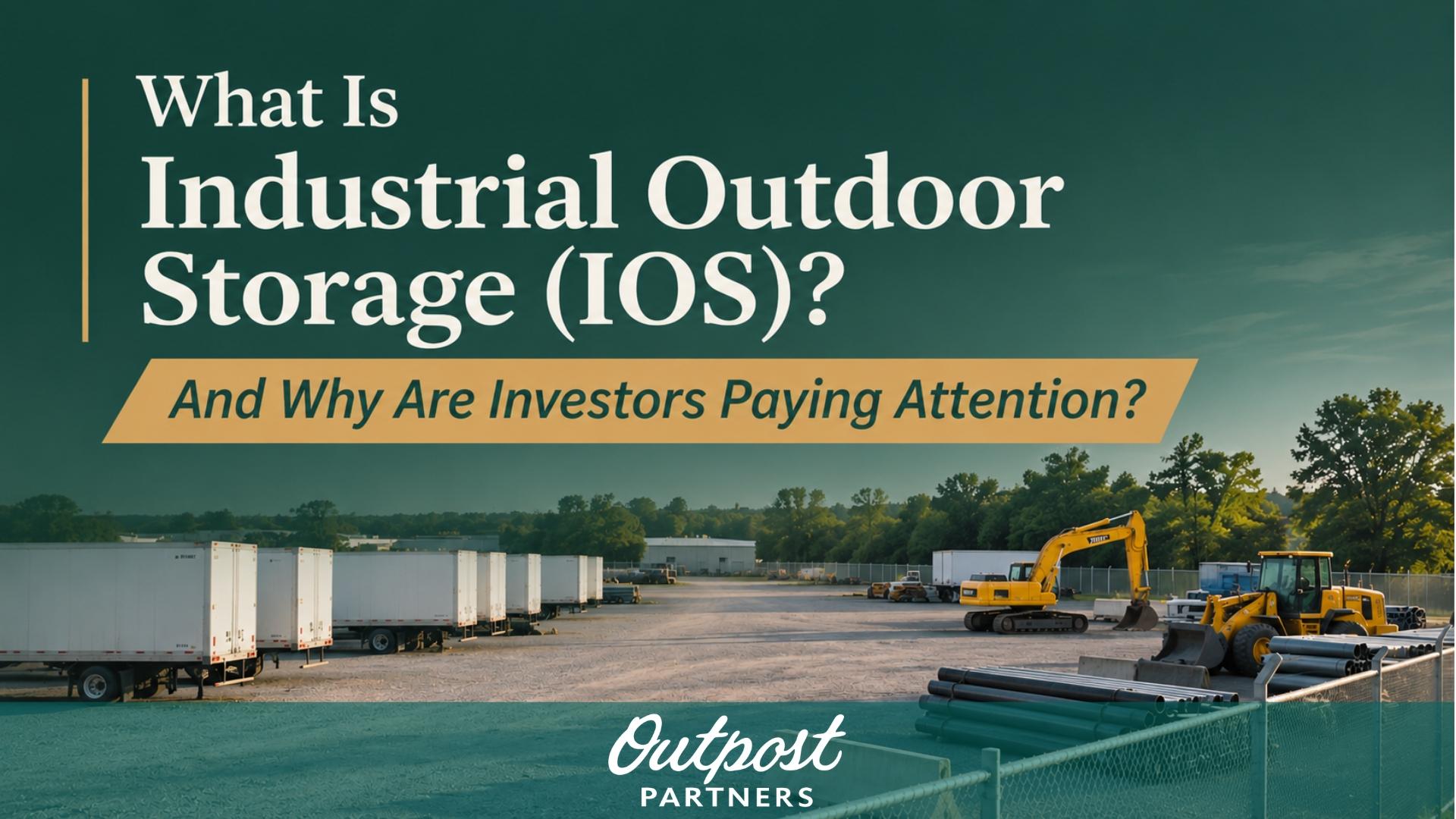
What Is Industrial Outdoor Storage (IOS), and Why Are Investors Paying Attention?
When people think about industrial real estate, they usually picture a warehouse with loading docks, high ceilings, and rows of trucks coming and going. But not every industrial property needs a large building to be useful.
Some businesses need something much simpler: a secure place to park trucks, store equipment, keep trailers, or organize materials.
That’s where industrial outdoor storage, or IOS, comes in.
IOS properties are becoming a more talked-about part of the industrial real estate market, especially among investors looking for opportunities beyond traditional warehouses. While the concept itself isn’t new, the attention surrounding it has grown as businesses continue to need more space for their day-to-day operations.
So, what exactly is IOS, and why are investors paying attention?
What Is Industrial Outdoor Storage?
Industrial outdoor storage refers to industrial-zoned properties where the primary use is storing vehicles, equipment, materials, or other items outdoors rather than inside a building.
These properties typically have a large open yard, fencing, gates, and enough space for businesses to move and store their equipment. Some also include a small office, maintenance building, or warehouse, but the outdoor area is usually the main attraction.
Common IOS uses include:
- Truck and trailer parking
- Construction equipment storage
- Contractor and utility yards
- Shipping container storage
- Fleet vehicle parking
- Building materials storage
Think about a construction company that owns several excavators, trucks, and trailers. Keeping all that equipment at a secure, accessible location is important to its daily operations. A traditional warehouse may not be necessary, but a well-located outdoor storage yard can make a big difference.
That’s the basic idea behind IOS: space that helps businesses operate, without necessarily needing a large building.
Why Are Investors Paying Attention to IOS?
One of the biggest reasons IOS has attracted investor interest is that businesses across several industries rely on outdoor storage.
Trucking companies need places to park trailers. Contractors need room for equipment and materials. Utility companies need space for vehicles and supplies. These businesses may not need a conventional warehouse, but they still need industrial property.
That creates demand for a type of space that can be difficult to replace in the right location.
Investors are also looking at IOS because the property can be relatively straightforward compared with a large industrial building. Depending on the site, there may be fewer building systems to maintain and less interior space to manage.
Of course, that doesn't mean every IOS property is simple or low-maintenance. The condition of the yard, drainage, security, zoning, and tenant needs all matter. Still, the combination of practical business demand and limited suitable sites has made IOS an interesting investment opportunity.
IOS Is More Than Just Truck Parking
It’s easy to think of industrial outdoor storage as nothing more than a place for trucks to park. Truck and trailer storage are certainly important uses, but IOS serves a much wider range of businesses.
Construction companies may use these properties to store heavy machinery and materials between projects. Electricians, plumbers, and other contractors may need space for work vehicles, tools, and supplies. Logistics companies may use outdoor yards to stage trailers or manage fleet operations.
This variety matters because IOS demand isn't tied to just one type of business.
A property that can serve multiple outdoor storage uses may have more leasing flexibility than a site designed around a very specific tenant. That said, flexibility depends on the property's location, layout, zoning, and condition. Not every yard can accommodate every use.
For investors, understanding who could realistically use the property is an important part of evaluating its potential.
Why Location Matters So Much
With traditional industrial buildings, investors often pay close attention to building size, clear height, loading doors, and the overall condition of the facility.
Those factors still matter when evaluating IOS, but location can be especially important.
Businesses usually want outdoor storage that is convenient for their operations. A trucking company may need quick access to major highways. A contractor may want to be close to the areas where its crews work. A utility company may need a yard within reach of the communities it serves.
A property that is too far from those operations may not be as useful, even if it has plenty of land.
Access also matters. Investors should consider whether trucks and heavy equipment can enter and exit the site comfortably, whether the yard has enough room for maneuvering, and whether nearby roads can handle the traffic.
In IOS, usable space is more important than simply having a large parcel.
The Supply of Suitable IOS Properties Can Be Limited
Another reason investors are looking at IOS is that finding a suitable property isn't always easy.
Industrial land near major roads, population centers, and logistics hubs is already valuable. In some markets, zoning restrictions and competing land uses can make it difficult to develop new outdoor storage sites.
That means a property may have value not just because of its size, but because it is already in a location where outdoor storage is allowed and practical.
However, investors should be careful not to assume that every vacant industrial lot can become an IOS property. Zoning, permitted uses, environmental conditions, paving requirements, drainage, and local regulations can all affect whether a site can legally operate as outdoor storage.
A property that looks promising on paper may require significant work before it can be used.
What Should Investors Look at Before Buying an IOS Property?
IOS can offer opportunities, but evaluating these properties requires more than checking the acreage and asking rent.
Here are a few things investors should pay close attention to:
1. Zoning and permitted use
Confirm that outdoor storage is allowed and understand any restrictions on the type of materials, vehicles, or equipment that can be stored. Existing use doesn't always mean future use is guaranteed.
2. Site condition
Look at the surface, drainage, fencing, gates, lighting, and overall security. A yard that needs major improvements may require more investment than expected.
3. Location and access
Consider proximity to highways, business districts, construction activity, and other areas that support tenant demand. Make sure the property can accommodate the vehicles and equipment tenants will bring.
4. Tenant demand
Understand who would lease the property and why. A strong location with a clear tenant base is more compelling than a large yard with limited practical demand.
5. Environmental concerns
Industrial land may have a history of uses that require additional investigation. Environmental due diligence is important, particularly when the property has previously been used for vehicle storage, equipment operations, or industrial activities.
6. Long-term potential
Some IOS properties may offer future redevelopment possibilities, but that potential should be evaluated realistically. Investors shouldn't rely on a future development plan to justify paying more for a property today.
The goal is to understand what the property can support now, what it may cost to operate, and whether the investment makes sense based on realistic assumptions.
Is IOS a Good Investment?
Like any commercial real estate investment, the answer depends on the property.
A well-located IOS site with appropriate zoning, good access, a usable yard, and dependable tenants may offer attractive investment characteristics. The property may also appeal to businesses that need outdoor space but don't require a full warehouse.
At the same time, IOS comes with its own risks. Tenant demand can change, local regulations can limit operations, and site improvements can be expensive. A property with poor drainage, inadequate access, or unresolved environmental issues may be much less attractive than it first appears.
Investors should also look closely at the lease. The amount of rent is only part of the picture. Lease length, tenant responsibilities, maintenance obligations, and the property's operating expenses all affect the investment.
IOS isn't automatically a better investment than traditional industrial real estate. It's simply a different property type with its own opportunities and considerations.
The Bottom Line
Industrial outdoor storage may not have the same profile as a large warehouse, but it plays an important role in how many businesses operate.
Companies need places to park trucks, store equipment, organize materials, and keep their operations moving. When a property can meet those needs in a convenient location, it can become a valuable part of the industrial real estate market.
For investors, the opportunity comes down to understanding the land, the tenant demand, and the property's ability to support outdoor storage over the long term.
IOS is worth paying attention to, but the strongest investments still start with the basics: a good location, a legally usable property, realistic numbers, and a clear understanding of who needs the space.
At Outpost Partners, we believe understanding the details of an industrial property is what helps investors make more informed decisions.
Whether you're evaluating an IOS opportunity, considering selling industrial land, or looking for the right property for your business, having the right guidance can help you see the opportunity more clearly.
Have questions about industrial outdoor storage or an industrial property you're considering? Contact Outpost Partners to start the conversation.